
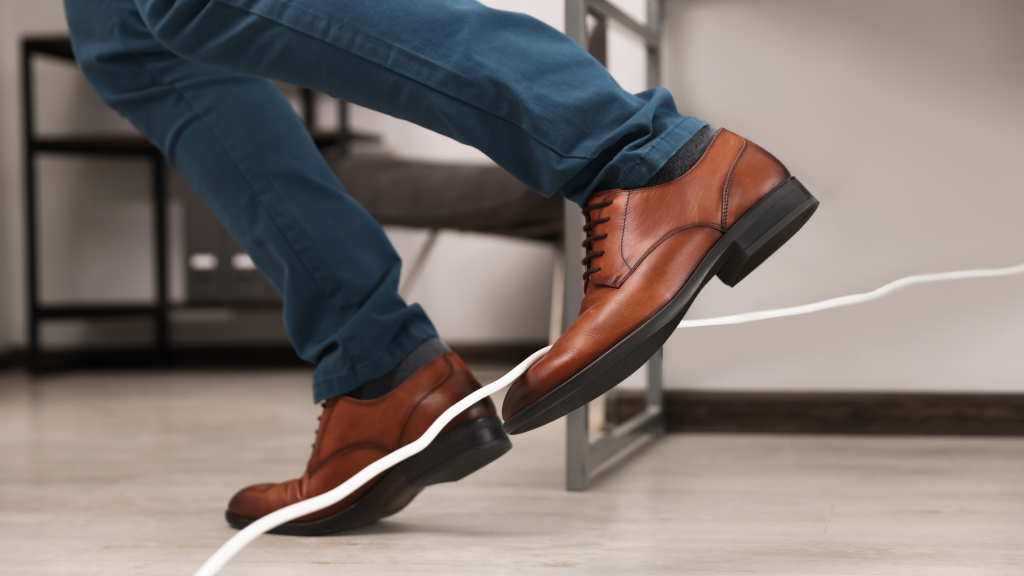
Falls are among the most common causes of personal injuries, but not every fall happens the same way. You may hear the terms “slip and fall” and “trip and fall” used interchangeably, but they generally describe two different types of accidents.
A slip and fall typically occurs when a person loses traction on a walking surface, while a trip and fall usually occurs when a person’s foot encounters an obstacle or uneven surface that interrupts their movement.
From a legal perspective, however, both types of accidents can lead to a California premises liability claim when a dangerous property condition contributes to an injury and the person or entity responsible for the property failed to exercise reasonable care.
At Kinsler Law, we help injured individuals throughout Oxnard, Ventura, Santa Paula, Camarillo, Ventura County, and California understand their rights after serious accidents. If you were injured in a fall on someone else’s property, understanding how the accident happened is an important first step in determining whether you may have a personal injury claim.
What Is a Slip-and-Fall Accident?
A slip and fall generally occurs when a person’s foot loses traction with the surface underneath them, causing the person to lose balance and fall.
Common causes of slip-and-fall accidents include:
- Wet or freshly mopped floors
- Spilled liquids
- Rainwater tracked into a business
- Grease or oil
- Slippery flooring
- Leaking refrigerators or plumbing
- Recently waxed surfaces
- Other substances that reduce traction
For example, a customer walking through a grocery store may slip on liquid that has been left on the floor. A restaurant employee or customer could fall on grease near a kitchen or service area. Someone entering a business during rainy weather could slip on accumulated water near the entrance.
The important legal question is not simply whether the floor was slippery. Liability generally depends on the circumstances surrounding the hazardous condition and whether the property owner or other responsible party exercised reasonable care.
What Is a Trip-and-Fall Accident?
A trip and fall generally occurs when a person’s foot strikes, catches on, or is stopped by an object or uneven surface, causing the person to fall forward or lose balance.
Common trip hazards can include:
- Uneven sidewalks
- Raised sections of pavement
- Potholes
- Torn or loose carpeting
- Electrical cords across walkways
- Debris or merchandise in aisles
- Broken stairs
- Uneven flooring
- Poorly maintained walkways
- Unexpected changes in floor elevation
For example, someone may trip over a raised section of concrete outside a business or catch their foot on damaged flooring inside an apartment building.
As with a slip and fall, the existence of a dangerous condition alone does not automatically establish liability. The circumstances surrounding the hazard and the property owner’s conduct must also be considered.
Slip and Fall vs. Trip and Fall: Why Does the Difference Matter?
Both accidents may fall under California premises liability law, but understanding the mechanism of the fall can be important when investigating what happened.
A slip and fall typically involves a loss of traction.
A trip and fall typically involves an obstruction, defect, or uneven surface that interferes with a person’s movement.
That distinction can affect the evidence needed to establish what caused the accident.
For a slip-and-fall claim, evidence might include:
- Photographs of a spill or wet surface
- Surveillance footage
- Cleaning and inspection records
- Witness statements
- Evidence of leaks or recurring spills
For a trip-and-fall claim, relevant evidence might include:
- Measurements of an uneven surface
- Photographs of damaged pavement
- Maintenance records
- Previous complaints about the hazard
- Surveillance footage
- Witness testimony
Determining exactly why someone fell can therefore be an important part of building a personal injury case.
When Is a Property Owner Responsible for a Fall in California?
California property owners generally have a duty to use reasonable care in maintaining their property.
This can include inspecting the property for dangerous conditions, repairing hazards when appropriate, and warning visitors about hazards that cannot immediately be corrected.
In a premises liability case, an injured person generally must establish that the defendant was negligent in the use or maintenance of the property and that the negligence was a substantial factor in causing the injury.
One important issue is often whether the property owner knew or reasonably should have known about the dangerous condition.
For example, imagine a grocery store customer spills a drink and another customer slips seconds later. The store may not have had a reasonable opportunity to discover and correct the hazard.
But if the spill remained on the floor long enough that reasonable inspections should have discovered it, the analysis may be different.
These cases are highly fact-specific, which is why evidence about inspections, maintenance, employee knowledge, prior complaints, and the length of time a hazard existed can become extremely important.
Who Can Be Held Responsible for a Slip or Trip and Fall?
The legally responsible party is not always simply the person whose name appears on the property deed.
Depending on the circumstances, potentially responsible parties could include:
- Property owners
- Business owners
- Commercial tenants
- Landlords
- Property management companies
- Maintenance companies
- Contractors
- Other parties responsible for creating or controlling the dangerous condition
Determining who controlled the area where the accident occurred can be an important part of investigating a premises liability claim.
Where Do Slip-and-Fall and Trip-and-Fall Accidents Commonly Occur?
Falls can happen almost anywhere, including:
- Grocery stores
- Restaurants
- Shopping centers
- Retail stores
- Apartment complexes
- Hotels
- Parking lots
- Office buildings
- Construction areas
- Sidewalks
- Stairways
- Private residences
Claims involving public sidewalks, government buildings, or other government-controlled property may involve additional rules and significantly different filing deadlines. Anyone injured on government property should consider seeking legal advice promptly.
What Injuries Can a Slip or Trip and Fall Cause?
Falls are sometimes dismissed as minor accidents, but they can cause significant injuries, particularly when a person lands on a hard surface.
Potential injuries include:
- Broken wrists or arms
- Hip fractures
- Knee injuries
- Shoulder injuries
- Back and spinal injuries
- Neck injuries
- Head injuries
- Traumatic brain injuries
- Cuts and bruising
- Soft-tissue injuries
Some symptoms may not be immediately obvious after a fall. Adrenaline and shock can temporarily mask pain, and certain injuries may become more noticeable hours or days later.
Seeking appropriate medical care after a serious fall is important for both your health and the documentation of your injuries.
What Should You Do After a Slip-and-Fall or Trip-and-Fall Accident?
Evidence can disappear quickly after a premises liability accident. A spill can be cleaned, merchandise can be moved, damaged flooring can be repaired, and surveillance footage may not be preserved indefinitely.
If you are able to do so safely after an accident:
- Report the fall to the property owner, manager, or employee.
- Ask that an incident report be created.
- Seek appropriate medical attention.
- Photograph or record the exact condition that caused the fall.
- Take wider photographs showing the surrounding area.
- Obtain names and contact information from witnesses.
- Keep the clothing and shoes you were wearing.
- Save medical records, receipts, and other documents related to your injuries.
- Write down what happened while the details are still fresh.
- Avoid making assumptions or admitting fault before the accident has been investigated.
If surveillance cameras may have captured the accident, preserving that footage can also become an important issue.
What If You Were Partially Responsible for the Fall?
Being partially responsible for an accident does not necessarily prevent you from recovering compensation in California.
California follows a pure comparative negligence system. This means compensation may generally be reduced according to the injured person’s percentage of responsibility.
For example, a property owner might argue that a hazard was obvious or that the injured person was distracted when the accident occurred. Those allegations do not automatically eliminate a claim. Instead, the facts may be evaluated to determine how responsibility should be allocated among the parties.
This is another reason why documenting the condition that caused the fall is so important.
What Compensation May Be Available After a Fall?
If another party’s negligence caused your injuries, you may be able to pursue compensation for losses associated with the accident.
Depending on the circumstances, recoverable damages may include:
Medical Expenses
These can include:
- Emergency treatment
- Hospitalization
- Diagnostic testing
- Surgery
- Physical therapy
- Prescription medication
- Rehabilitation
- Reasonably necessary future medical care
Lost Income
A serious injury may prevent you from returning to work temporarily or permanently. A claim may include qualifying losses associated with:
- Lost wages
- Reduced earning capacity
- Future loss of income
Pain and Suffering
Depending on the case, non-economic damages may also be available for consequences such as:
- Physical pain
- Emotional distress
- Loss of enjoyment of life
- Physical limitations
- Disfigurement
The value of a premises liability case depends on the specific facts, including the severity of the injury, available evidence, and the degree of responsibility attributed to each party.
How Long Do You Have to File a Slip-and-Fall Claim in California?
California generally provides a two-year statute of limitations for personal injury lawsuits, although exceptions can change the applicable deadline.
Importantly, claims involving a California government entity can have much shorter procedural deadlines. In many cases, an administrative claim must first be presented within six months.
Waiting can also create practical problems even when the legal filing deadline has not expired. Surveillance footage can be deleted, witnesses can become difficult to locate, and hazardous conditions may be repaired before they are documented.
For these reasons, it is generally beneficial to investigate a serious fall as soon as possible.
How Kinsler Law Can Help After a Slip or Trip and Fall
Premises liability cases often involve more than proving that someone fell on another person’s property. Determining what created the hazard, how long it existed, who controlled the property, and whether reasonable precautions were taken can require a detailed investigation.
At Kinsler Law, we can help injured individuals:
- Investigate how the accident occurred
- Identify potentially responsible parties
- Preserve photographs, video, and other evidence
- Review maintenance and inspection issues
- Communicate with insurance companies
- Document injuries and financial losses
- Pursue appropriate compensation when negligence contributed to the accident
We represent injured individuals throughout Oxnard, Ventura, Santa Paula, Camarillo, Ventura County, and other California communities.
Contact Kinsler Law for a Free Consultation
Whether you slipped on a wet floor or tripped over an unsafe walking surface, a serious fall can result in significant medical expenses, lost income, and lasting physical limitations.
Understanding what caused the accident—and whether another party failed to maintain reasonably safe conditions—is an important part of determining your legal options.
Kinsler Law offers free consultations by phone or Zoom in English and Spanish. There are no upfront legal fees, and you only pay if we recover compensation on your behalf.
If you were injured in a slip-and-fall or trip-and-fall accident in California, contact Kinsler Law today to discuss what happened and learn more about your rights.